Released in 2023 and still widely sold for roughly $160–200, the Cubot P80 makes a simple pitch: a sharp Full HD+ display, generous memory and storage, a big battery, NFC, and a near-stock version of Android — all at a budget price.
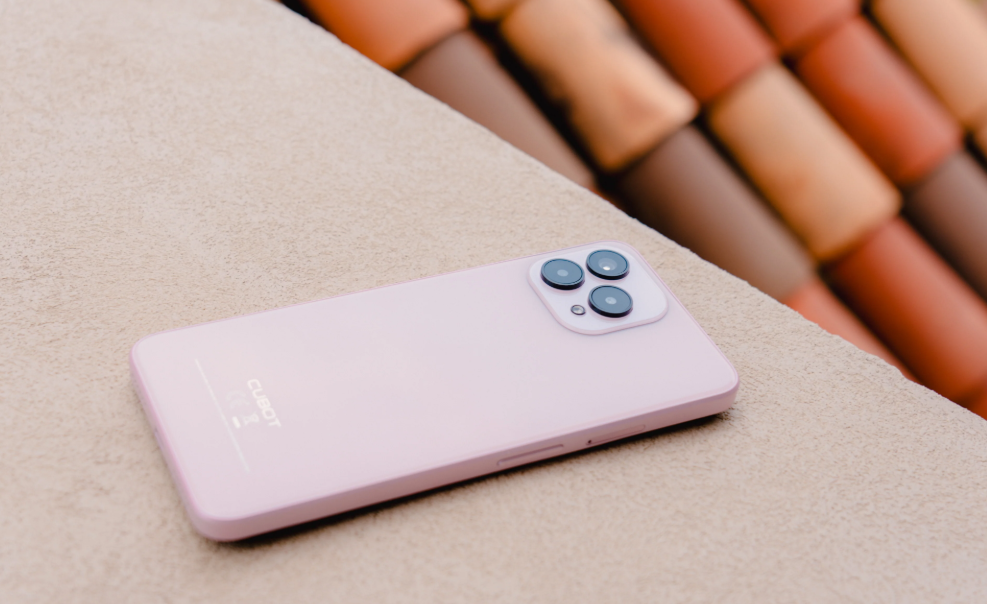
On paper, it looks remarkably complete. The real question is what you give up to get all of that for under $200.
Design and First Impressions
The P80 doesn’t pretend to be a flagship. With a plastic frame, a glass back, and a weight of around 217 g, it feels chunky and utilitarian in the hand — more tool than fashion statement.
Practical touches soften that impression: a side-mounted fingerprint reader, USB-C, NFC for contactless payments, and a hybrid dual-SIM slot that can take a microSD card instead. Cubot also throws in a case and a pre-applied screen protector, a small courtesy that budget brands still bother with.
The compromises start here, though. There’s no 5G, no official water-resistance rating, and no headphone jack.
Display: Better Than Expected, With One Caveat
The 6.58-inch IPS panel runs at Full HD+ resolution — noticeably sharper than most phones at this price. Independent testing puts brightness at around 500 nits, which is perfectly usable indoors and adequate outdoors in all but direct midday sun. Contrast is decent for an IPS panel, though colors lean slightly cool.
The catch is the refresh rate: it’s a standard 60 Hz panel. Some retailer listings claim 120 Hz — that’s pure marketing fiction. Scrolling through email, maps, and video is smooth enough, but anyone coming from a modern mid-range phone will notice the difference.
Performance: Fine for Daily Life, Nothing More
The P80 runs on MediaTek’s MT8788, an older 12 nm octa-core chip, paired with 8 GB of RAM and either 256 GB or 512 GB of storage. For everyday tasks — messaging, browsing, YouTube, navigation, light gaming — it holds up well.
Push it with several heavy apps at once, however, and the age of the silicon shows. Connectivity is similarly dated: 4G only, Bluetooth 4.2, and Wi-Fi 5.
Software: Clean, but Don’t Count on Updates
The phone ships with a relatively clean build of Android 13, and that’s genuinely one of its strengths — no bloated interface, no duplicate apps fighting for attention. The downside is long-term support.
Cubot is not Google or Samsung, and security patches are likely to arrive slowly, if at all. If multi-year software support matters to you, look elsewhere.
Cameras: Good Enough for Social Media
The rear setup is led by a 48 MP main sensor, backed by a 2 MP macro lens and a token auxiliary sensor that exists mostly to pad the spec sheet. In good daylight, photos are sharp enough for social sharing.
In shade or mixed lighting, detail drops off quickly and dynamic range is limited; video tops out at 1080p. The 24 MP front camera handles selfies and video calls competently. Nobody buys this phone to build a photography portfolio — and that’s fine.
Battery: The Standout Feature
The 5,200 mAh battery is the P80’s biggest everyday advantage. It comfortably lasts a full day of mixed use, and some lab tests have recorded over 17 hours of screen-on time.
Charging, however, is capped at 18 W, so a full top-up takes around an hour and a half. If you spend long stretches away from outlets, the capacity is a real asset; if you hate waiting, 18 W feels antiquated in 2026.
Who Should Buy It
The Cubot P80 makes sense if you want big storage, NFC, a sharp screen, clean software, and all-day battery life for under $200 — and you’re willing to accept 4G-only connectivity, a 60 Hz display, an aging chipset, and a merely adequate camera.
Gamers, 5G early adopters, fast-charging devotees, and anyone who values long-term software support should spend their money elsewhere.