DWhen DJI first launched the Goggles 2, it was undeniably a major leap forward for FPV enthusiasts. Now in 2026, with both the Goggles 3 and N3 on the market, you might wonder: is the Goggles 2 still worth a spot in your gear bag?
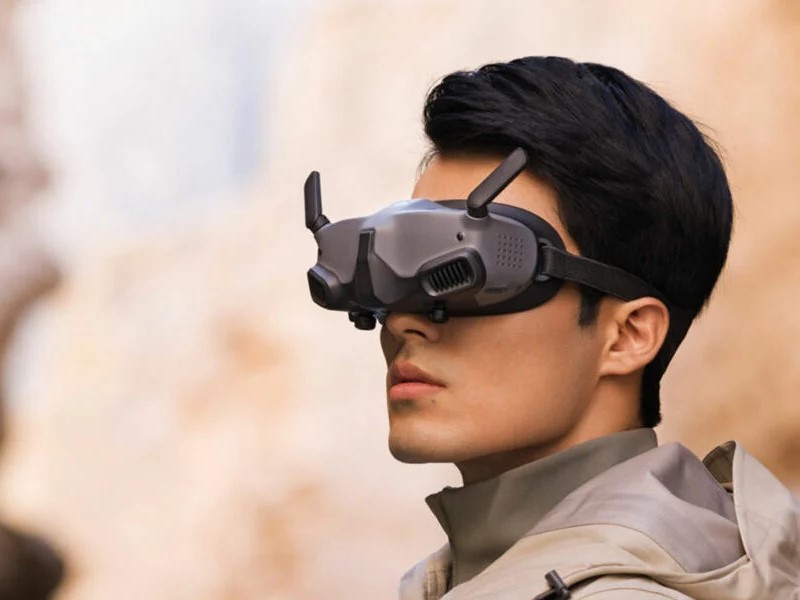
First Impressions: Lightweight, Crisp, and Comfortable
Weighing just 290 grams with the headband, the Goggles 2 is noticeably lighter than its predecessor. Its dual 1080p Micro-OLED displays deliver vibrant colors, providing an impressively immersive view whether you are weaving through trees or cruising over open fields.
The adjustable diopter range from -8.0 D to +2.0 D is a total lifesaver for glasses wearers, eliminating the hassle of adjusting contacts before a flight. However, you do have to swap physical lenses rather than adjusting them continuously like on the newer Goggles 3.
Performance: Smooth, Responsive, and Reliable
Latency on the Goggles 2 remains top-notch. You get a glass-to-glass latency of around 30 milliseconds at 1080p/100fps, which drops to 40 milliseconds at 1080p/60fps. For most pilots, this is far below what the human eye can notice. Dual-band transmission automatically hops frequencies to minimize interference, while the rated transmission range of up to 10 kilometers gives you plenty of operating room.
The external battery provides roughly 2 hours of flight time. While not groundbreaking, it is more than enough for an afternoon session. Keep in mind that the battery must be charged separately, as it lacks an integrated power design like the Integra or Goggles 3.
Compatibility: The Secret Weapon of the Goggles 2
If the Goggles 2 remains competitive today, its secret weapon is versatility. Hands down, it is one of the most compatible headsets DJI has ever made.
- FPV Drones: Native compatibility with the DJI Avata, Avata 2, and the original DJI FPV drone.
- Camera Drones: You can fly the Mini 3 Pro, Mini 4 Pro, Air 3, and the entire Mavic 3 lineup.
- Air Units: This is where things get really exciting. The Goggles 2 works with the O3 Air Unit, the O4 Air Unit, and even older systems like the Caddx Vista or RunCam Link.
That said, there are a few limitations with O4. While the Goggles 2 can connect to O4 Air devices, the bitrate caps out at 50 Mbps, and Racing Mode is not supported. The Goggles 3 unlocks the higher 60 Mbps bitrate for O4 with lower latency.
Because of this, if you are building a high-end racing setup, the Goggles 3 is the better pick. For freestyle flying and casual cinematic shots, though, the Goggles 2 handles O4 gear without breaking a sweat.
Controller compatibility is just as flexible. The Goggles 2 pairs smoothly with the DJI FPV Remote Controller 2 and RC Motion 2, and head tracking works on supported drones like the Avata 2 and Mini 3 Pro.
The Verdict
In 2026, the DJI Goggles 2 occupies a sweet spot in pricing. Brand new, it sells for only about $50 less than the Goggles 3, making the G3 a better long-term retail purchase. On the secondhand market, however, you can often grab a Goggles 2 set for a bargain.
It may no longer be the newest model around, but for most pilots, it still hits the ideal balance of immersion, versatility, and everyday practicality.