If battery life is your top priority and you want a phone that can reliably last a full two days, the Moto G86 Power 5G remains a solid choice even as the end of 2026 approaches. It is no longer the newest model in Motorola’s lineup, but a year has not diminished its biggest advantage: a 6,720 mAh battery. More impressive still, the phone does not feel like a brick despite that battery. In hand, it is considerably lighter than expected.
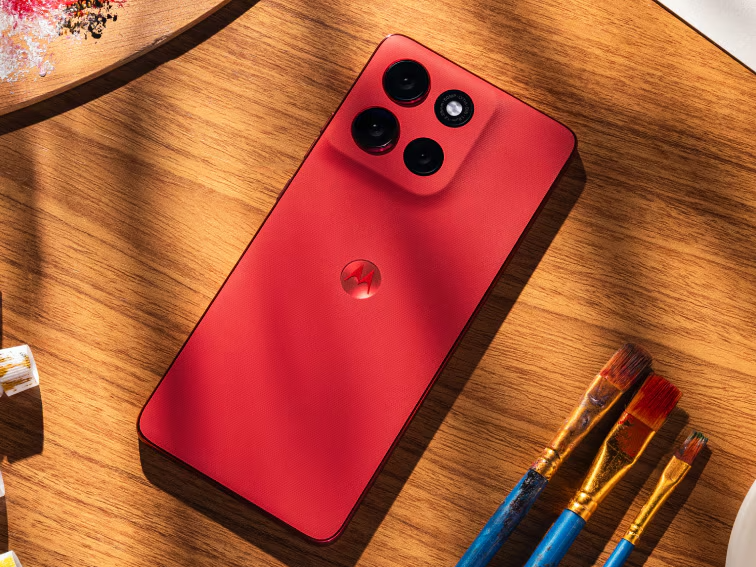
What exactly are you getting?
Motorola launched this Power model about a year ago, and its core specifications still hold up today:
- MediaTek Dimensity 7300 processor, 8GB of RAM, and 512GB of storage, with no support for a memory card
- 6.67 inch 120Hz flexible OLED display with very high peak brightness that remains readable outdoors
- 50 megapixel Sony main camera with optical image stabilization, an ultrawide camera, and a 32 megapixel front camera
- Both IP68 and IP69 ratings, with build quality that feels more solid than other phones in this price range
On the software side, it shipped with Android 15, and Motorola has promised two major Android upgrades along with security updates through June 2029. That support period is not especially long for a budget phone, but it is enough to keep the phone from feeling obsolete too soon.
How has it held up after one year?
On Wi-Fi, its battery life comes close to 27 hours, a major advantage over the standard G86 with its 5,200 mAh battery and roughly 17 hours. For typical mixed daily use, charging every two days is entirely realistic. If you only use it lightly over the weekend for messages and browsing, you may not even need to think about bringing a charger.
Charging is the only real weakness. It supports 30W fast charging and reaches about 20 percent in 30 minutes. Plugging it in before bed and leaving with a full battery in the morning is perfectly workable. However, if you are already used to much faster charging, this pace can feel frustrating.
The Dimensity 7300 handles everyday navigation, social apps, and photo processing smoothly, and it can also run lightweight games. It does get warm under sustained heavy loads, and Wi-Fi supports only a single channel, so local file transfers are slower than the advertised numbers suggest. None of this meaningfully affects everyday use.
Below $300, very few phones combine an OLED panel, a 120Hz refresh rate, and excellent outdoor visibility. Even Motorola’s own G Power line still uses an LCD display. Keep in mind that this screen has the same low-frequency dimming flicker found on other OLED panels in its class. If you are sensitive to that, it is worth trying the phone in person before buying.
The Sony main camera produces sharp, detailed photos in daylight with natural colors. The ultrawide camera’s macro performance is also more pleasing than its specs suggest. Its zoom capability is average at best, low-light photos are merely passable, and there is no telephoto lens. Those shortcomings were easier to accept at launch. By 2026, rivals in the same price range have started to catch up in camera specs.
It comes in attractive Pantone colors, and some versions use a vegan leather finish, but the plastic frame still feels somewhat cheap to the touch. The software experience is generally clean, with some common promotional apps preinstalled, although they are not too intrusive.
How does it compare with the newer Moto G87?
The Moto G87 launched in May this year as the nominal successor to the G86 Power. It brings newer software, a larger display, a higher-resolution main camera, and a lighter, thinner body, while retaining solid durability ratings.
Look closer, though, and its drawbacks become clear. Motorola swapped the Dimensity 7300 for the lower-tier Dimensity 6400, which actually means a step backward in performance. Battery capacity also dropped from 6,720 mAh to 5,200 mAh, leading to noticeably shorter battery life. Put simply, the G87 is a lighter, slimmer phone that places more emphasis on photography, but it makes that trade at the cost of both battery life and performance.
The price gap is substantial as well. The G87 launched in Europe at about €399 and in the United Kingdom at close to £350. The G86 Power, meanwhile, has fallen from £300 to roughly £230, while an unlocked imported version in the United States comes in at around $250. The newer model costs more while offering a weaker battery and a weaker processor, so the value calculation is easy.
As for other competitors, the Samsung Galaxy A16 and A17 can be found for $150 to $200 during sales. Their screens and battery life are not as strong, but they receive longer software support. The Pixel 9a and 10a are the opposite: battery life is shorter, but camera quality and software support are far better. They are also considerably more expensive, still costing $400 or more during promotions.
If you are considering an imported version, check the supported frequency bands first. The G86 Power supports the common bands used by GSM carriers such as T-Mobile and Mint, but it is not certified for Verizon. It is not a good idea to use it as your main phone on Verizon.
Is it still worth buying now?
If you are on a limited budget and battery life matters most to you, the answer is yes. The G86 Power remains the strongest battery performer in its price class, while its performance and display also hold their own.
However, if you need local U.S. warranty coverage, a headphone jack, expandable storage, or software updates beyond 2028, it may not be the right phone for you.