Handheld X-ray fluorescence (XRF) analyzers have completely revolutionized field material testing, spanning industries like scrap metal recycling, alloy verification, mining, and consumer product screening. The Thermo Scientific Niton XL2 series stands out as one of the most popular choices on the market.
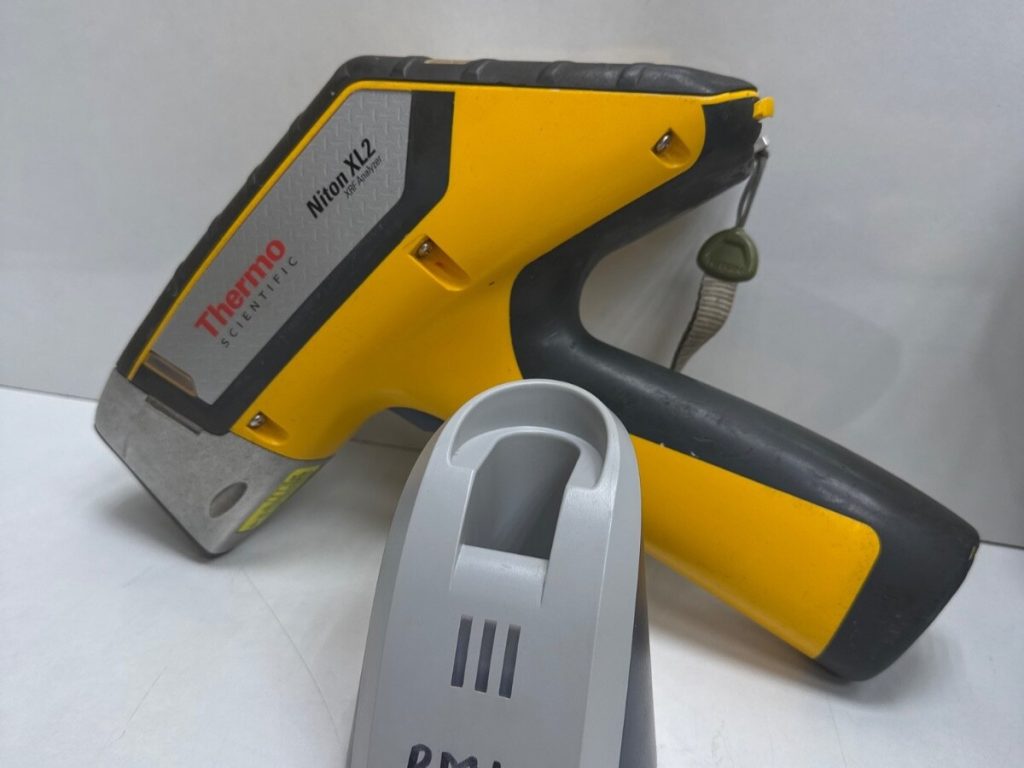
If you are planning to purchase one—whether new, used, or refurbished—the sheer number of model configurations can be confusing. If you already own one, you might wonder whether its battery or holster will fit a colleague’s unit.
Let’s break down everything you need to know.
The Niton XL2 Product Lineup
The Niton XL2 is not just a single product. It is a family of devices with diverse configurations designed to meet specific applications and budgets. Here are the primary models you will encounter in the field:
Entry-Level and Specialized Models
- XL2 100G: An affordable, general-purpose metal analyzer. Equipped with a high-performance semiconductor detector, it analyzes 25 elements from titanium (Ti) to bismuth (Bi), making it ideal for basic scrap sorting and manufacturing quality assurance.
- XL2 100P (Precious Metals): Optimized specifically for jewelry and precious metal bullion analysis. It measures 14 key elements, including gold, silver, platinum, and palladium.
- XL2 600 / 700: Configured specifically for soil analysis and consumer product screening, including RoHS and WEEE compliance testing.
Mid-Range Workhorses
- XL2 800: The classic general-purpose metal analyzer. It handles over 25 elements from sulfur (S) to uranium (U), features an integrated camera, and comes with a dual battery pack. It is a go-to choice for positive material identification (PMI) and alloy grade verification.
- XL2 950: Upgraded with a Silicon Drift Detector (SDD) for faster analysis speeds, typically calibrated for soil and mining applications.
Performance and GOLDD Models
- XL2 980 GOLDD: The flagship performance model. GOLDD stands for Geometrically Optimized Large Area Drift Detector. It detects light elements like magnesium, aluminum, silicon, phosphorus, and sulfur without requiring helium purge or vacuum pumps, which is crucial for aluminum and titanium alloys. This detector operates at 45 kV / 100 µA compared to the standard 80 µA.
- XL2 980 Plus / 950 Plus: Upgraded versions featuring enhanced electronics, IP54 weather protection, and an improved battery management system with hot-swap support. The 980 Plus uses an SDD detector to cover elements from magnesium to uranium.
Other Variants
You may occasionally encounter models such as the XL2 500 (soil and mining), XL2 501, and XL2 970 (consumer goods), though these are less common on the secondhand market.
Accessory Compatibility: Are Parts Interchangeable?
One major advantage of the XL2 series is accessory interchangeability, which is especially beneficial for fleet operators and mixed-equipment job sites. Most hardware accessories work seamlessly across the entire XL2 lineup.
Replacement batteries, AC power adapters, and docking stations are interchangeable across most XL2 models, including the 100G, 800, 980, and Plus variants. While hot-swappable battery support is exclusive to the Plus models, standard chargers are universally compatible.
What is NOT Interchangeable?
The notable exception is the XRF window. The correct window material depends directly on your detector type:
- PIN Diode Models (100G, 100P, 500, 600, 700, 800): Use polypropylene windows.
- SDD/GOLDD Models (950, 980, 970, Plus Series): Use Prolene windows.
Using the wrong window material can compromise light element detection accuracy or even damage the detector. Always choose a window specifically matched to your model.
Summary
The Niton XL2 lineup was engineered around platform consistency. This level of interoperability offers significant cost savings and logistical benefits. When ordering spare parts, always verify the XRF window material and battery part numbers. If you are ever unsure, check your detector type (PIN diode vs. SDD) or provide your unit’s serial number to your distributor.
Pro Tip: When buying a pre-owned unit, prioritize listings that include the full standard kit: the hard case, holster, two batteries, charger, cables, and calibration check samples.